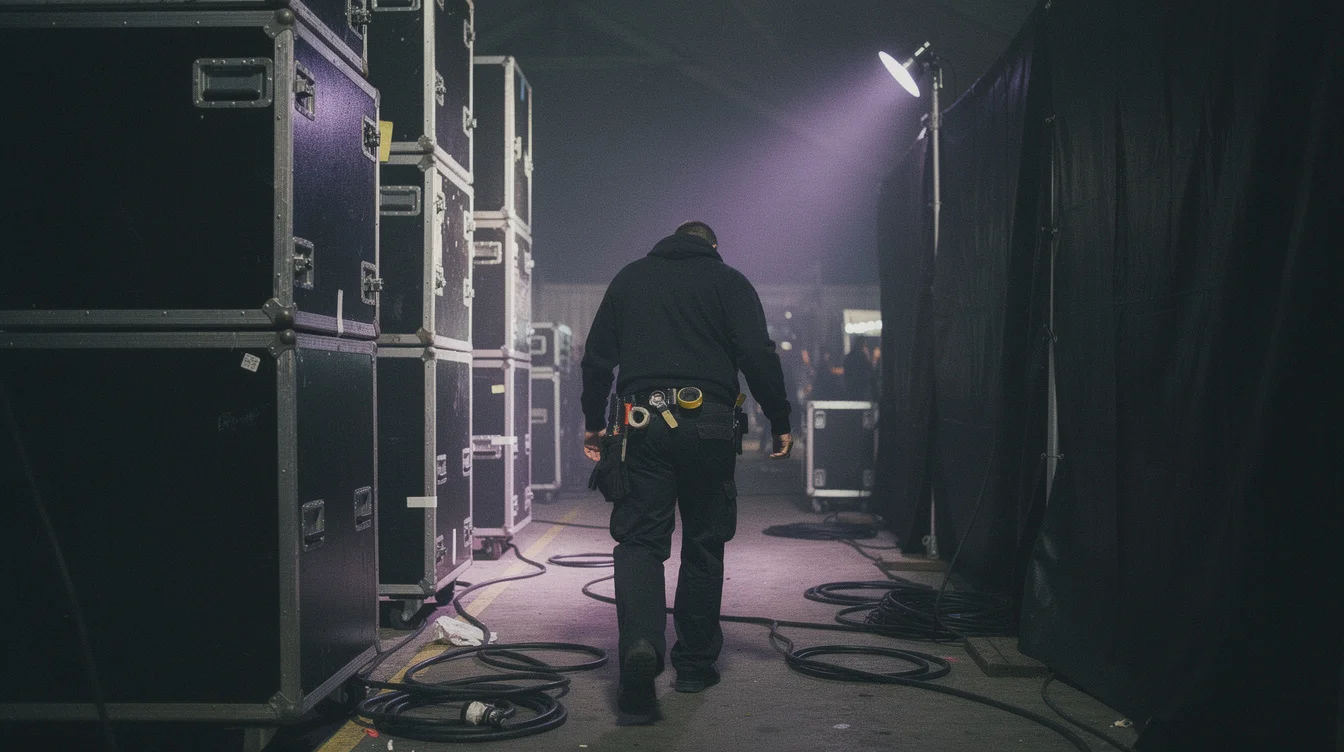
There is a particular kind of person who always seems to have things under control. You know the type. They are the ones who respond to "How are you?" with a quick, confident "Fine. Busy, but fine." They say it without hesitation, without even thinking about whether it is true. They say it because they have said it a thousand times before, and because the alternative feels impossible.
They are the leader who delivers quarter after quarter, the founder who is building something extraordinary on four hours of sleep, the sales director whose numbers are untouchable. They are the person everyone else looks to when things get difficult. They are, by most measurable standards, succeeding.
And they are, very often, falling apart.
The most dangerous sentence in high-performance culture is not "I can't cope." It is "I'm fine." One invites help. The other shuts the door on it.
This is not a new observation. The link between high performance and hidden struggle is well documented. But what is less well understood is how the culture of professional environments actively manufactures this pattern, rewards it, and then punishes the people who eventually break under the weight of it.
This article is about that pattern. It is about the problem, the real cost, and what it takes to break the cycle before it breaks you.
The Problem: Performed Resilience
In most professional environments, there is an unwritten rule that everyone understands: you do not show weakness. You do not admit that the workload is unsustainable. You do not say that the pressure is affecting your sleep, your relationships, your health. You simply absorb it, perform through it, and hope that the next quarter, the next deal, the next milestone brings some relief.
This is what performed resilience looks like. It is the act of presenting a composed, capable exterior while the internal experience tells a completely different story. It is not the same as genuine resilience, which involves recognising pressure, processing it, and adapting. Performed resilience is a mask. It is a survival strategy that works brilliantly in the short term and catastrophically in the long term.
The roots of this pattern run deep. Most high-performers learned early in their careers that visibility of struggle carries a cost. They saw what happened to colleagues who admitted they were overwhelmed. They noted the subtle shift in how those people were perceived: less capable, less reliable, less promotable. They learned the lesson quickly and they learned it permanently. Do not show it. Do not name it. Keep going.
What makes this particularly insidious is that the professional world does not just tolerate this behaviour. It celebrates it. The leader who works through illness gets praised for dedication. The founder who sacrifices everything for the business gets profiled as a visionary. The team member who never complains, never pushes back, never takes a sick day gets promoted. The system selects for people who are willing to perform resilience, and then it accelerates them into positions where the pressure intensifies.
The result is a generation of leaders, founders, and senior professionals who have been systematically trained to ignore their own internal signals. They are extremely good at producing results. They are extremely bad at recognising when the cost of those results has become unsustainable.
The phrase "always on" has become so normalised that it is treated as a personality trait rather than a warning sign. Being always on is not a strength. It is a state of chronic activation that the human nervous system was never designed to maintain. But in most professional cultures, stepping away from that state feels like stepping back from success itself.
And so people stay in it. Year after year. Until the cracks become impossible to ignore.
The Impact: What Actually Breaks
The consequences of chronic stress masking are not abstract. They are specific, predictable, and deeply damaging. And they almost never arrive as a single dramatic event. Instead, they accumulate quietly, compounding over months and years until the damage is structural.
Decision fatigue becomes the norm. Under sustained pressure, cognitive capacity degrades. The brain prioritises threat detection over creative problem-solving. High-performers experiencing chronic stress often maintain their output for an impressively long time, but the quality of their decisions begins to deteriorate long before the quantity does. They start defaulting to safe choices. They avoid strategic risk. They become reactive rather than proactive. From the outside, they still look effective. From the inside, they know something has changed.
Relationships erode. Not suddenly, not dramatically, but steadily. The leader who is always on has very little left to give when they get home. Conversations become functional. Presence becomes physical rather than emotional. Partners learn not to ask too much. Children adapt to a parent who is there but not really there. These shifts happen so gradually that they often go unnoticed until the damage is significant. The relationship did not collapse. It was slowly starved.
Physical symptoms emerge. Chronic stress is not a psychological experience that stays neatly contained in the mind. It manifests physically: disrupted sleep, persistent tension, digestive issues, elevated blood pressure, weakened immune function. High-performers often dismiss these symptoms or manage them with medication, caffeine, alcohol, or sheer willpower. They treat the symptoms as inconveniences rather than signals, because acknowledging them as signals would mean acknowledging the problem.
The compounding effect is where the real danger lies. None of these consequences happen in isolation. Decision fatigue affects relationships. Relationship strain affects sleep. Poor sleep affects physical health. Declining physical health affects capacity. Reduced capacity increases the pressure to perform. The cycle accelerates.
Consider a pattern that repeats across industries and roles. A senior leader, highly respected, consistently delivering. Their team relies on them. Their board trusts them. Their output is excellent. But they have not slept properly in months. They are drinking more than they used to. Their partner has stopped asking how work is going because the answer is always the same. They have started cancelling plans with friends because they simply cannot face the social effort.
They are not in crisis. They would never describe themselves as struggling. If you asked them directly, they would say they are fine. Busy, but fine.
Twelve months later, the picture is different. The drinking has become a nightly routine. A key relationship has ended. A health scare has forced a conversation they have been avoiding. Their performance has not collapsed, but it has plateaued, and they know, privately, that they are operating on reserves that are nearly empty.
This is not a hypothetical. This is a composite drawn from hundreds of real conversations. The details change. The trajectory is remarkably consistent.
The most concerning aspect of this pattern is the delay between cause and consequence. The damage is being done long before it becomes visible. By the time a high-performer acknowledges that something is wrong, the compounding effect has been running for months or years. Recovery takes proportionally longer.
The Solution: Operating Differently
The instinct, when confronted with this pattern, is to prescribe rest. Take a holiday. Work fewer hours. Switch off your phone. And while rest is necessary, it is not sufficient. Rest addresses the symptom. The cause is structural: it is the operating model itself that needs to change.
This is the distinction that matters. Genuine resilience is not about building a higher tolerance for pressure. It is not about enduring more, recovering faster, or developing a thicker skin. Those are all variations of the same performed resilience that created the problem in the first place.
Genuine resilience is about redesigning how you operate under pressure. It is about building systems, habits, and patterns that are sustainable by design rather than sustainable by willpower. It is about recognising that the goal is not to survive the pressure indefinitely, but to create conditions where the pressure does not accumulate in the same way.
Resilience is not about enduring more. It is about operating differently. The strongest performers are not the ones who absorb the most pressure. They are the ones who have learned how to let it move through them.
The role of structured support. There is a reason that willpower alone rarely produces lasting change in this area. The patterns that sustain performed resilience are deeply embedded. They are reinforced daily by the professional environment. They are tied to identity, to status, to self-worth. Unpicking them requires more than good intentions.
This is where structured coaching becomes essential. Not as a crisis intervention, but as a deliberate, sustained process of examining and redesigning how you work, think, and respond under pressure. Coaching provides the external perspective that performed resilience actively prevents. It creates a space where the mask comes off, where the real cost can be assessed honestly, and where change can be designed rather than improvised.
The most effective approach is one that blends resilience science with practical behaviour change. It is not enough to understand the theory of stress and recovery. The understanding has to translate into concrete changes in how you manage your time, your energy, your boundaries, your relationships, and your response to pressure.
What sustainable operating models actually look like. The specifics vary by individual, but the principles are consistent. A sustainable operating model includes clear boundaries between high-intensity work and genuine recovery. It includes honest assessment of capacity rather than optimistic overcommitment. It includes deliberate practices for processing stress rather than accumulating it. And it includes regular, structured reflection on whether the current approach is working or simply being endured.
These changes are not dramatic. They are not about abandoning ambition or stepping back from challenging work. They are about doing that work in a way that does not require you to sacrifice your health, your relationships, and your long-term capacity in order to deliver short-term results.
A structured programme, typically over 12 weeks, provides the framework for this kind of change. It is long enough to move past the initial resistance, to build new patterns, and to stress-test those patterns in real-world conditions. It is not therapy. It is not mentoring. It is a rigorous, practical process of redesigning how you operate, supported by someone who understands the specific pressures of high-performance professional environments.
The 12-week timeframe matters because lasting behaviour change does not happen in a single conversation or a weekend retreat. It happens through sustained, deliberate practice with accountability and feedback. Each week builds on the previous one, moving from awareness to understanding to practical implementation to embedded habit.
What changes. People who engage seriously with this process typically report a shift that is hard to articulate but impossible to miss. They describe feeling less reactive. More present. More able to make decisions from clarity rather than from fatigue. Their output does not decrease. In many cases it improves, because they are operating from a foundation of genuine capacity rather than borrowed time.
Relationships improve. Sleep improves. The constant background hum of pressure quiets. Not because the external demands have changed, but because the internal response to those demands has been fundamentally redesigned.
This is not a cure. It is a capability. And like any capability, it requires deliberate development and ongoing practice.
If you recognise yourself in any of this, you are not alone. And recognising it is not a weakness. It is the first honest assessment you may have allowed yourself in a long time.
The decision to seek support is not an admission that something is wrong with you. It is an acknowledgement that the way you have been operating has a cost, and that cost has become unsustainable. It is a practical decision, made by someone who is ready to operate differently.
That is what this work is about. Not fixing what is broken. Redesigning what is no longer sustainable.
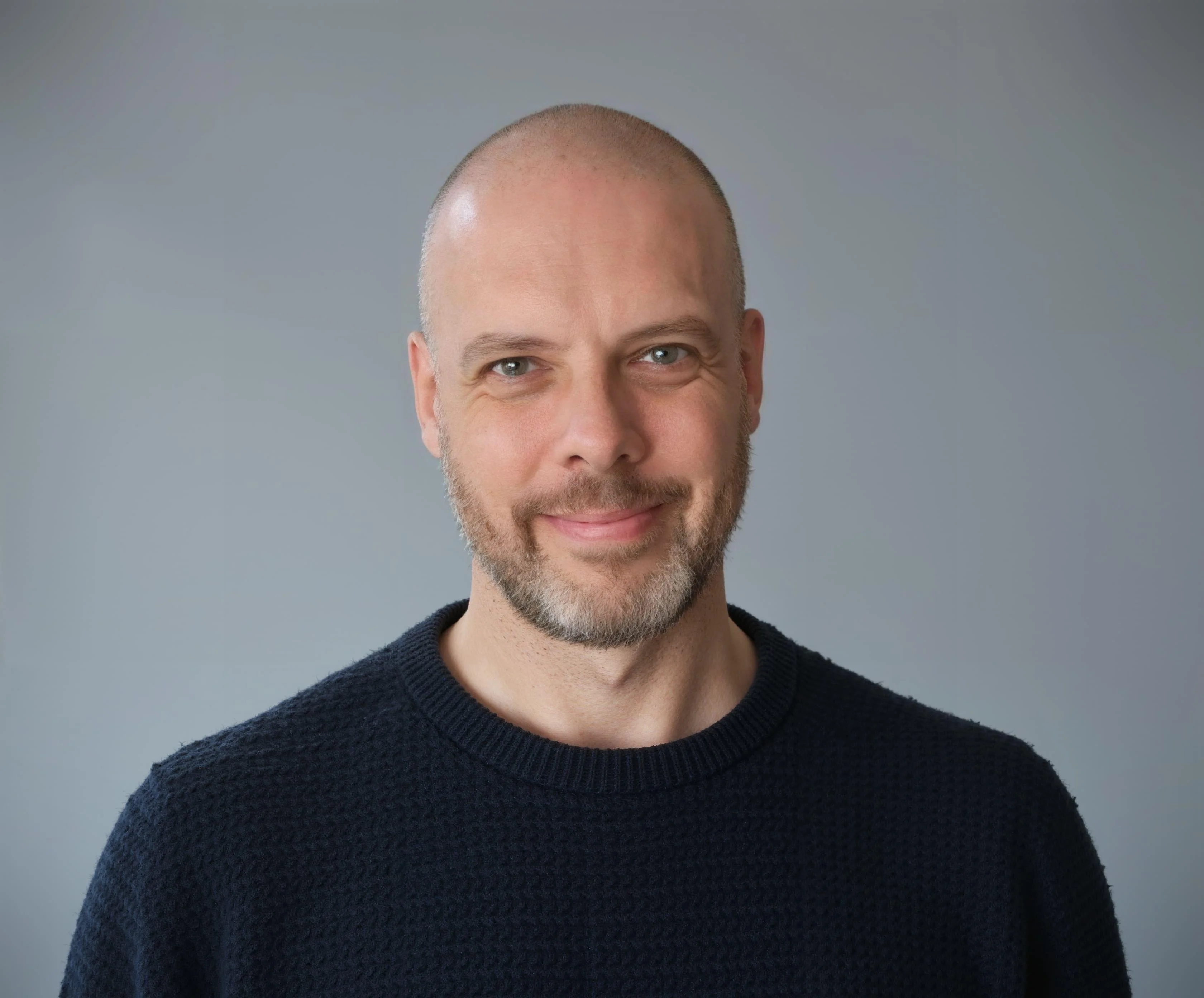
James Duke-Evans
Founder, Unlocked Resilience
Over 20 years of experience working with high-performers across sales, leadership, music, and live events. James combines resilience science with practical behaviour change to help people operate sustainably under pressure.